CASE 03 / AI LEARNING PRODUCT
知芽 · 2026 · WEB RELEASE
BLOOMXP
A full learning loop where planning, focus, evidence, review and reward reinforce one another.
从 AI 规划到自习、凭证审核、长期记忆和宠物成长的完整学习产品闭环。
Read from the local React frontend package.
Planning chat, tutoring, evidence review and daily reflection.
React client, Spring transactional core and FastAPI/LangGraph cognitive sidecar.
Time decay keeps older retrieved learning context from dominating forever.
01 / Product evidence
See the system at work.
Captured from the working product and its repository-backed preview states.
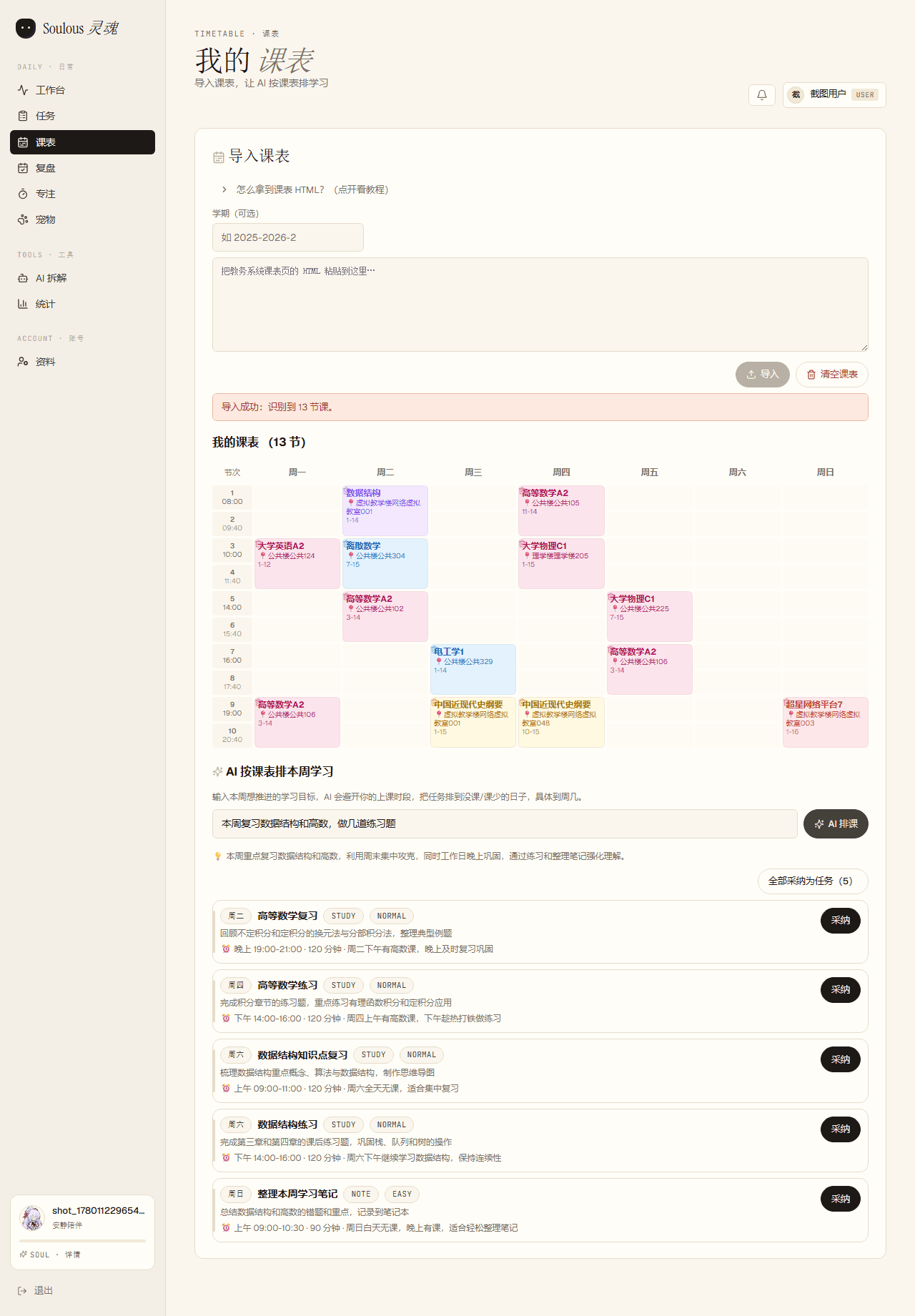
Imported classes become constraints for an AI study plan instead of living in a separate calendar silo.
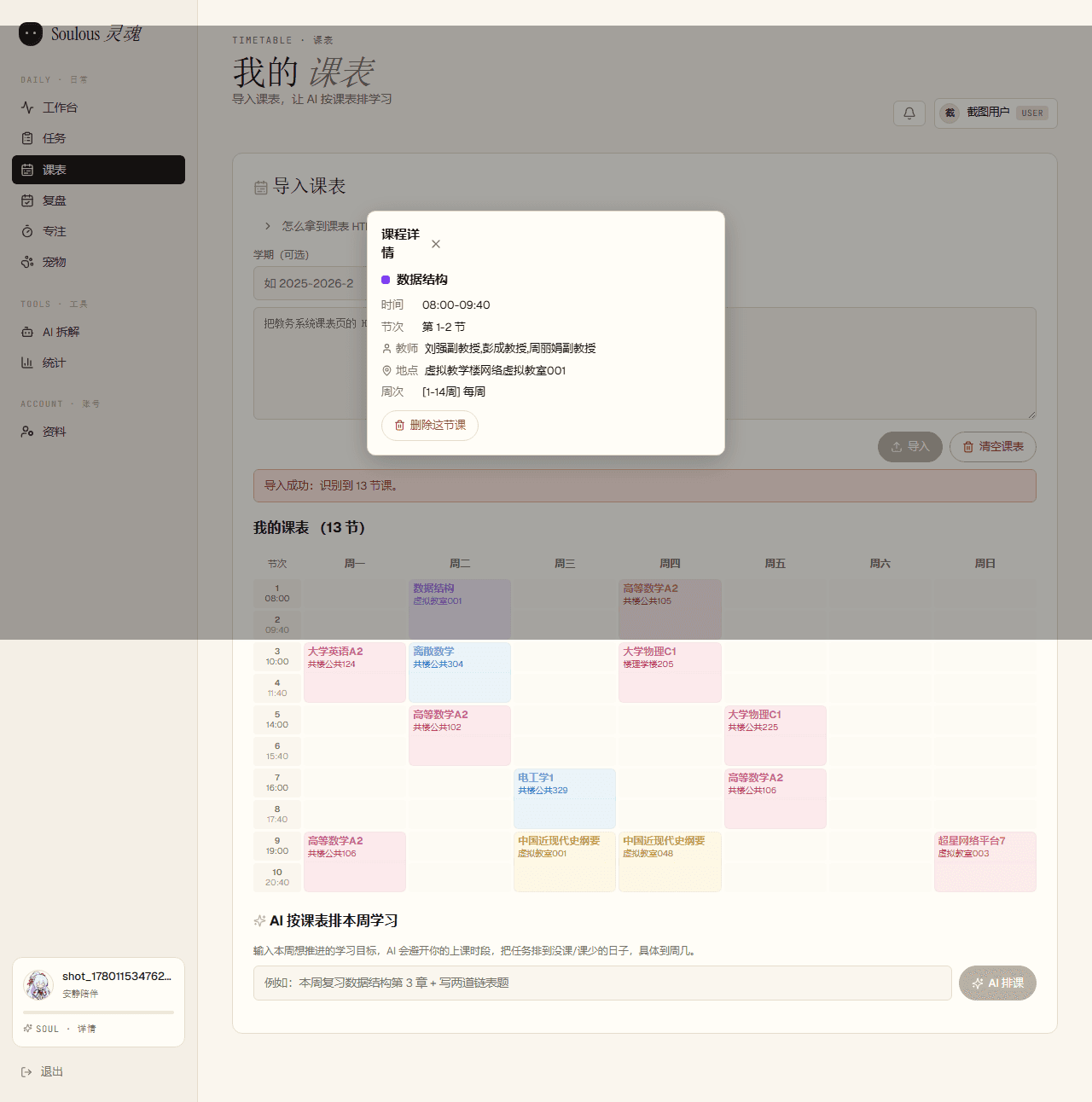
Every imported course remains inspectable and editable before it influences later planning.
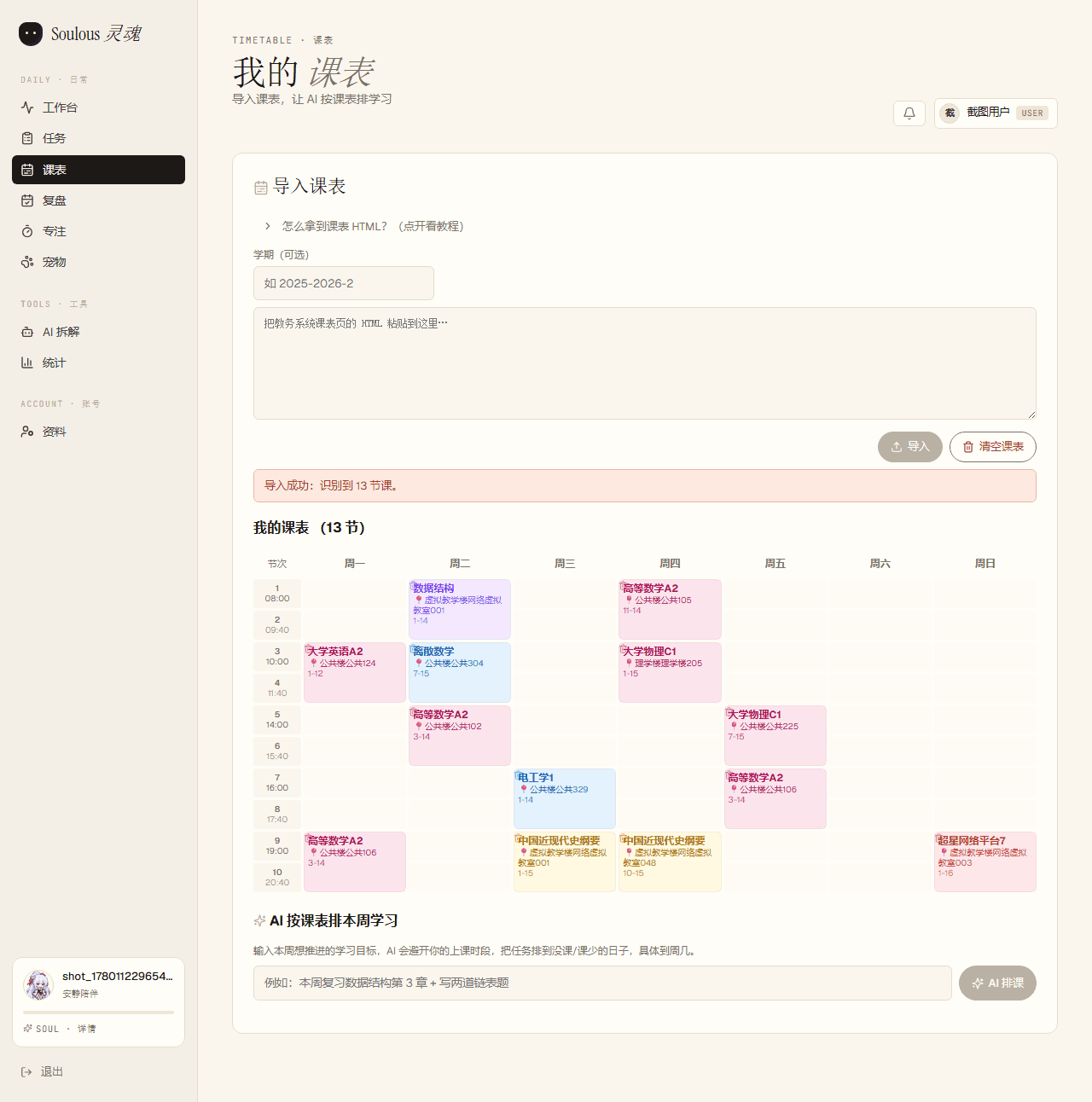
The weekly grid gives the learning loop a concrete time boundary for focus and review.
02 / Problem and response
Role
Product system · full-stack architecture · AI workflows · interaction · reliability
Learning apps often optimize either planning or motivation; the difficult part is preserving evidence, feedback and memory across the whole loop.
Design the product as a stateful loop, give every AI action a transactional fallback, and let progress affect a visible companion economy instead of a disposable score.
03 / System trace
How the system moves.
- 01
Plan
AI conversation turns a goal into an editable plan and concrete tasks.
- 02
Focus
Solo or shared study rooms create observable time and context around execution.
- 03
Prove
Text, code or image evidence is submitted with explicit storage and authorization boundaries.
- 04
Review
The cognitive sidecar evaluates evidence; deterministic rules remain available as a fallback.
- 05
Reinforce
Rewards, reflection and decayed long-term memory feed the next planning cycle.
04 / Engineering decisions
The important work happened at the boundaries.
Keep product truth in the transactional core
AI services may suggest and evaluate, but accounts, tasks, evidence, rewards and audits remain owned by Spring and the database.
Make AI failure survivable
Each cognitive path has a local service or deterministic rule fallback instead of turning provider availability into product availability.
Release the Web, freeze the archive
The Web client is the only active release line; the Android/Capacitor source is retained without pretending it has equal validation.
05 / Proof, not promise
These statements come from the project's local repository, manifests and validation notes—not invented portfolio metrics.
Backend tests, frontend Vitest, production build and Playwright E2E define the active release boundary.
VERIFIED TRACEFlyway migrations own production schema changes; production startup validates instead of mutating tables implicitly.
VERIFIED TRACEMicrometer/Prometheus metrics cover LLM latency, rate limits, moderation and storage cleanup.
VERIFIED TRACE06 / Build record
Network tools and source-aware AI workflows entered the cognitive sidecar.
The product homepage became a usable guest study room rather than a marketing gate.
Web production release, accessibility baseline and release-history reconciliation.